This participatory installation was developed during a three-month residency at Art Explora's Vila 31, the former residence of Albanian communist leader Enver Hoxha.
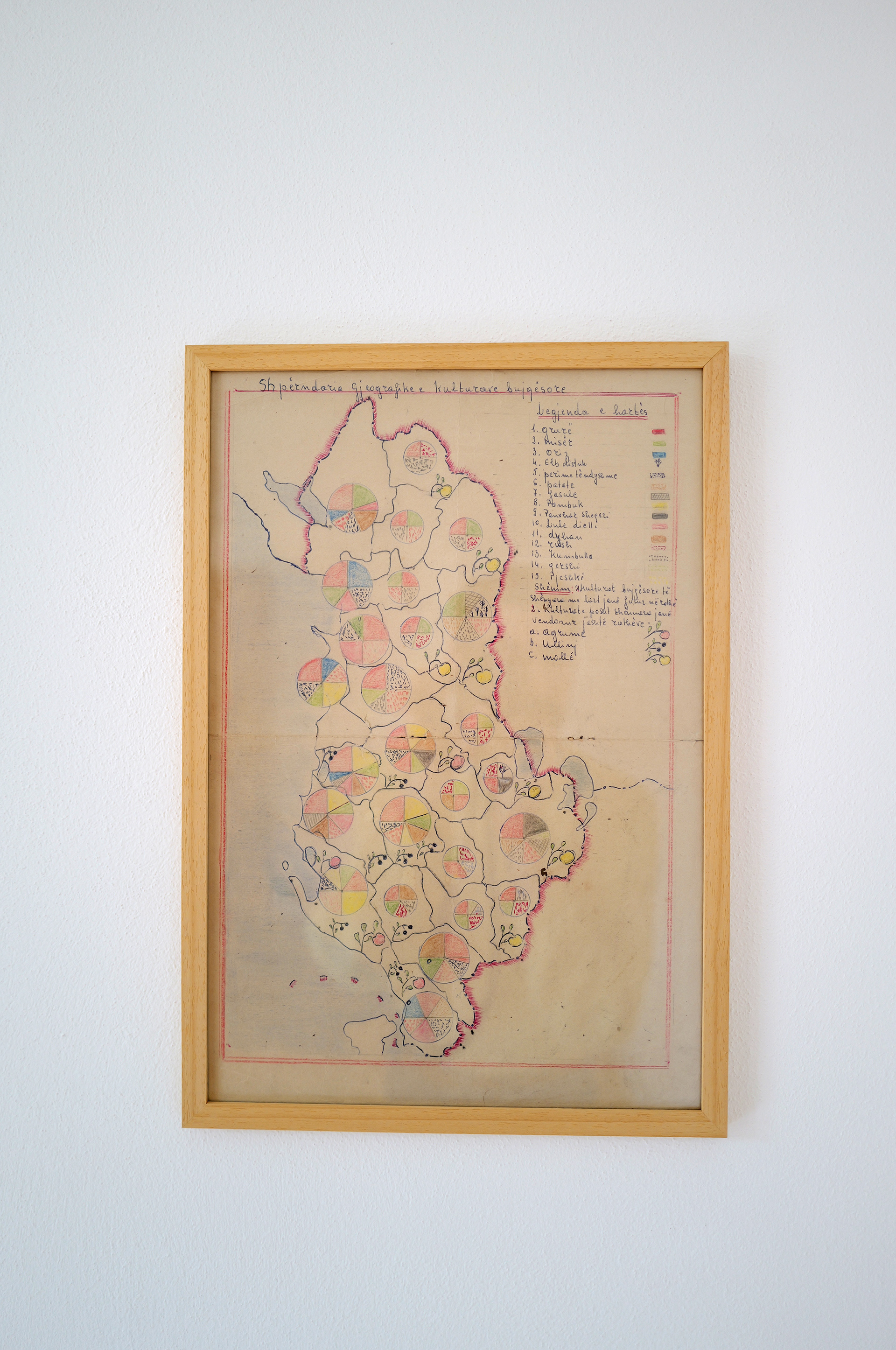
The artist found a hand-drawn map titled Map of the Distribution of Agricultural Crops in Albania and began investigating who made it and why. Through research with the Agricultural University of Tirana, she learned that the map was likely created by a 12th-grade student during the communist period as part of a geography assignment. It depicts the distribution of agricultural crops across Albania's 26 districts. Unlike the original map, this version omits the numerical data and retains only the pie charts. The traced lines suggest that the student copied an official map from the Statistical Yearbook of Agriculture published between the 1960s and 1980s. The handwriting also suggests that it was completed in the student's final year of high school, when teachers became more lenient about handwriting because of the increased academic workload.
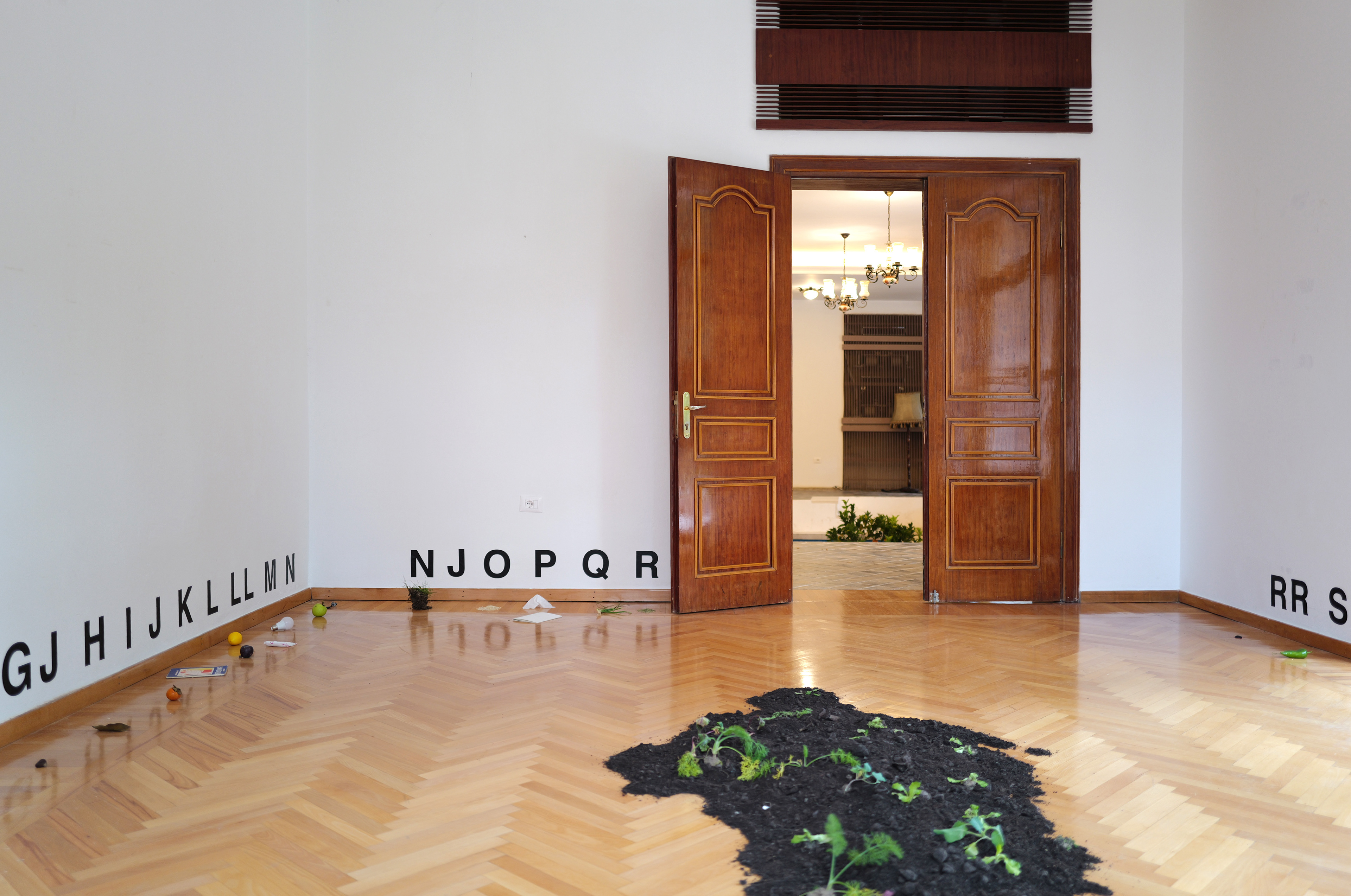
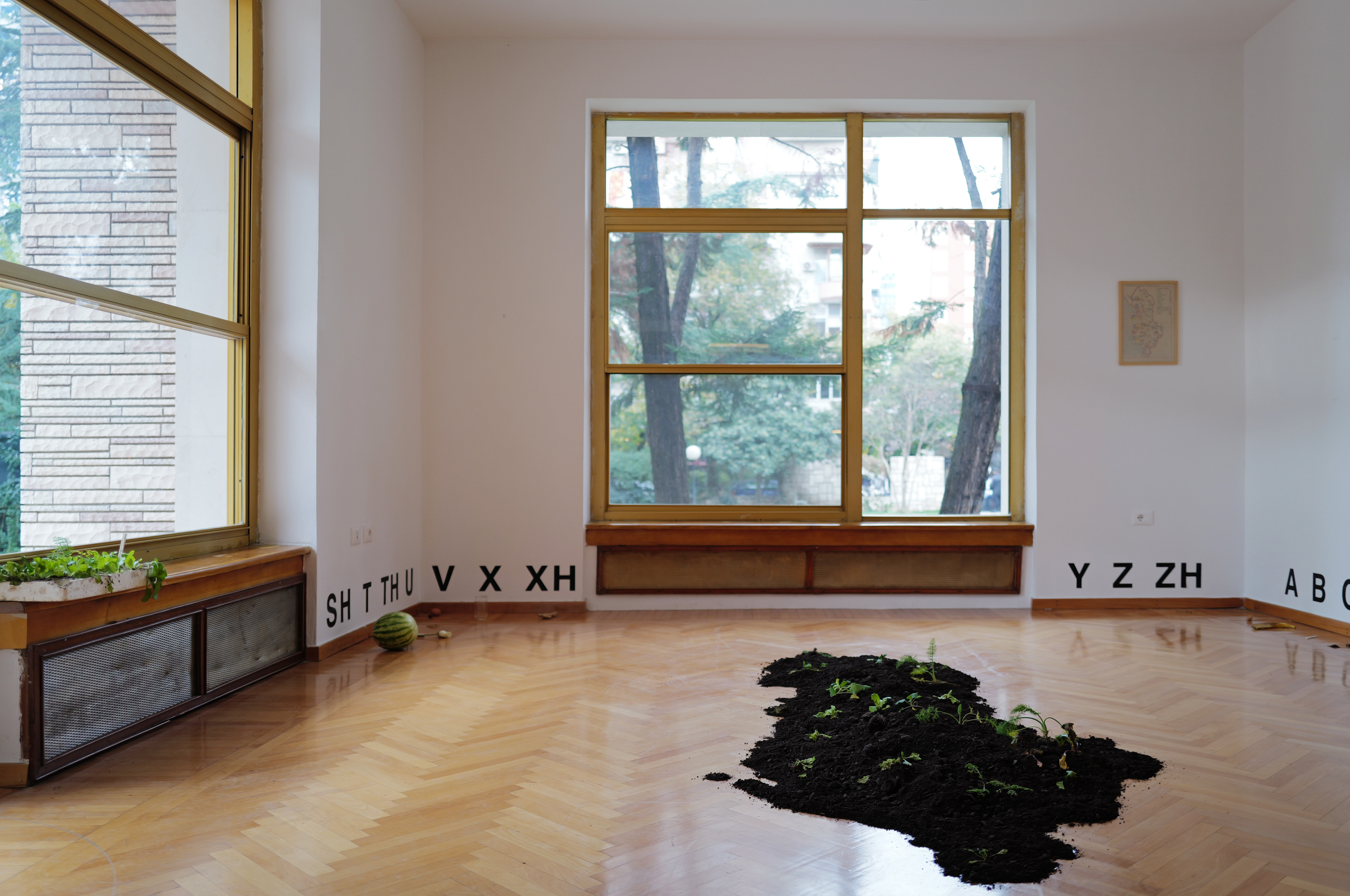
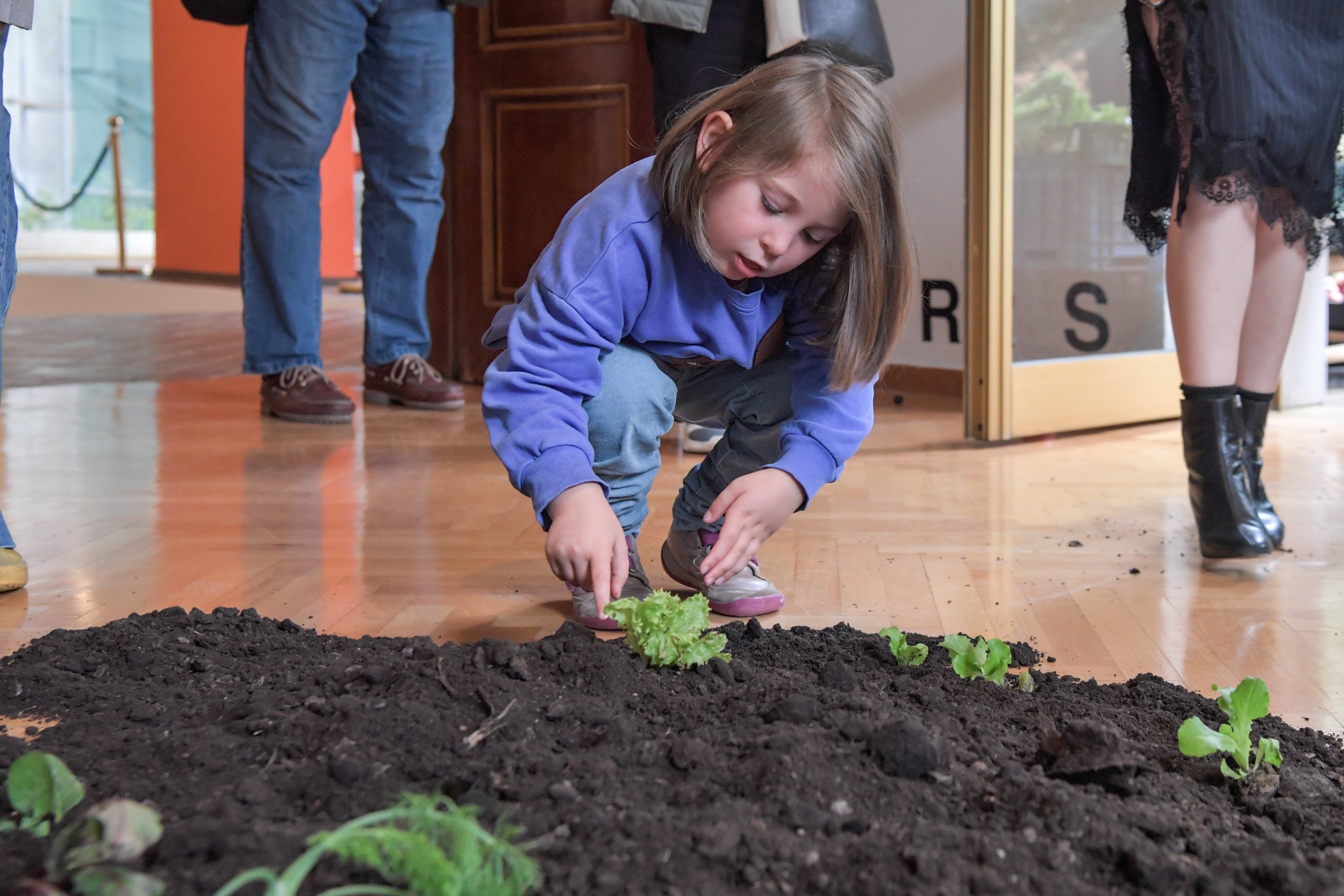
Using the map as a guide, the artist invites participants to collectively distribute crops in a central installation shaped like the territory of Albania. As participants place the crops, they are invited to imagine a possible future in which fields of wheat, sunflowers, or corn emerge from the historical data. Through this collective act, they carry forward an assignment that may have begun with a single high school student.
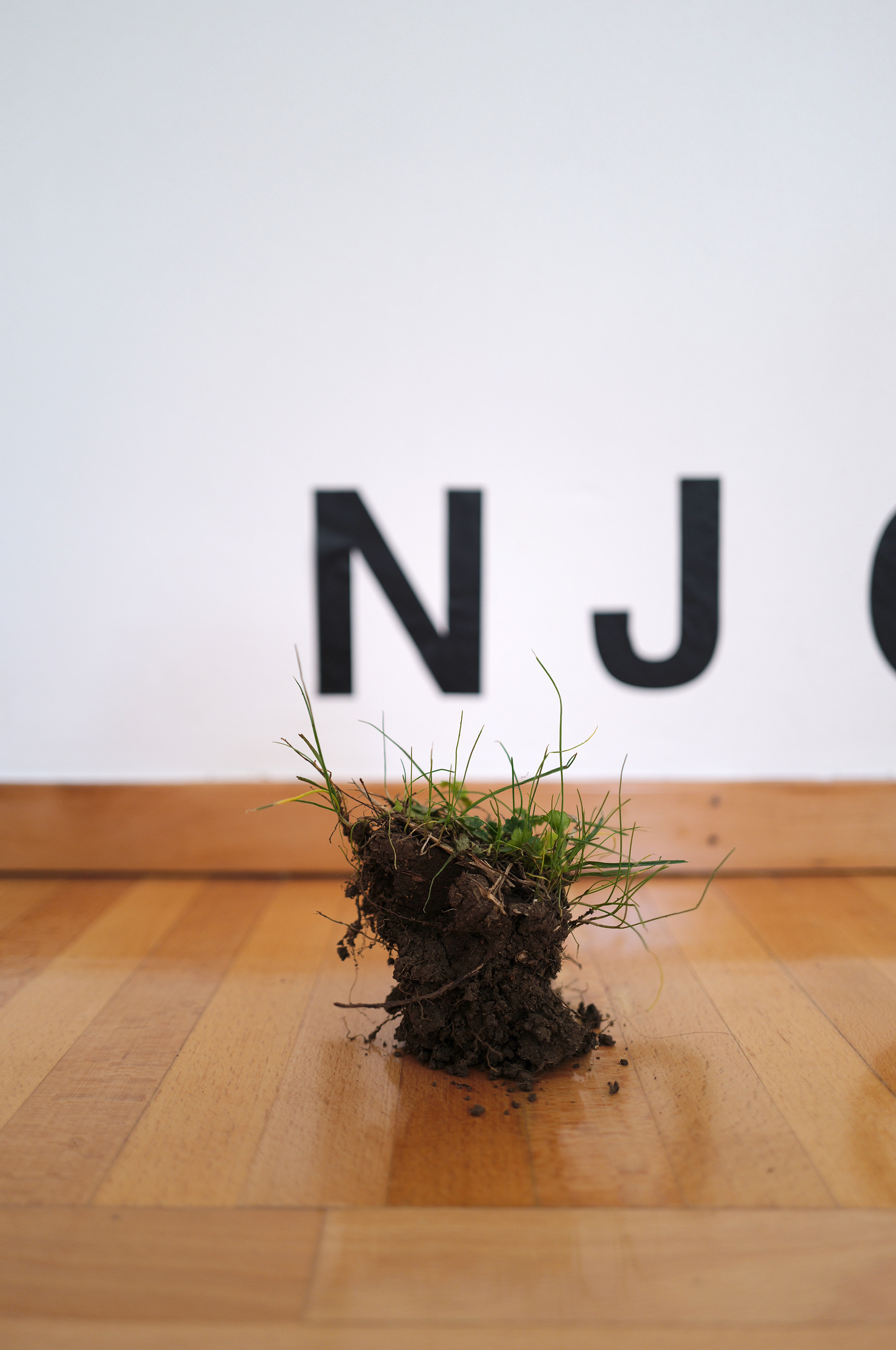
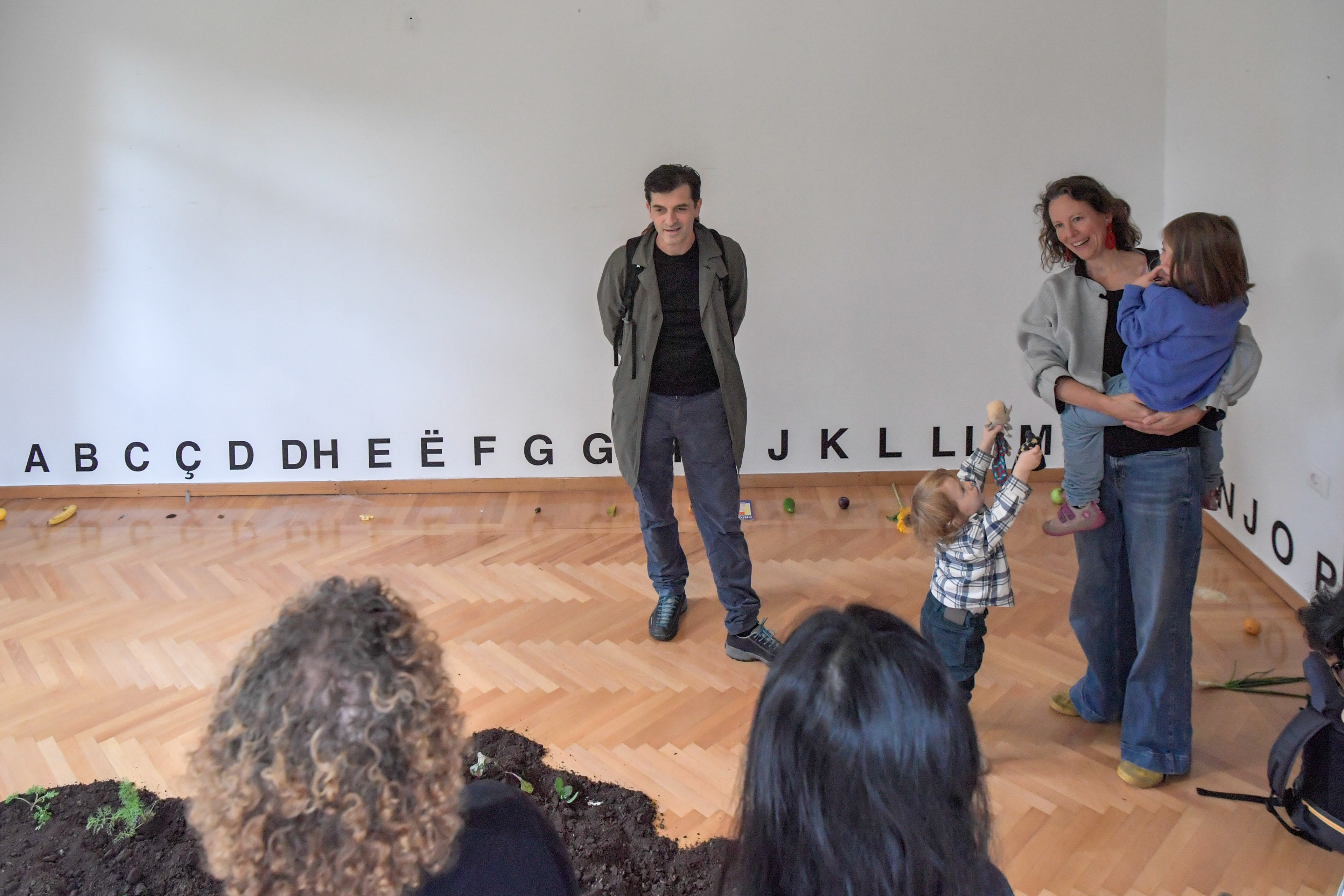
In the same space, the 36 letters of the Albanian alphabet are displayed on the wall alongside 36 corresponding objects. Participants are invited to exchange an object according to the Albanian dialect they speak, whether Tosk or Gheg. This action intervenes in the tradition of linguistic standardization established by the 1972 Orthography Congress.
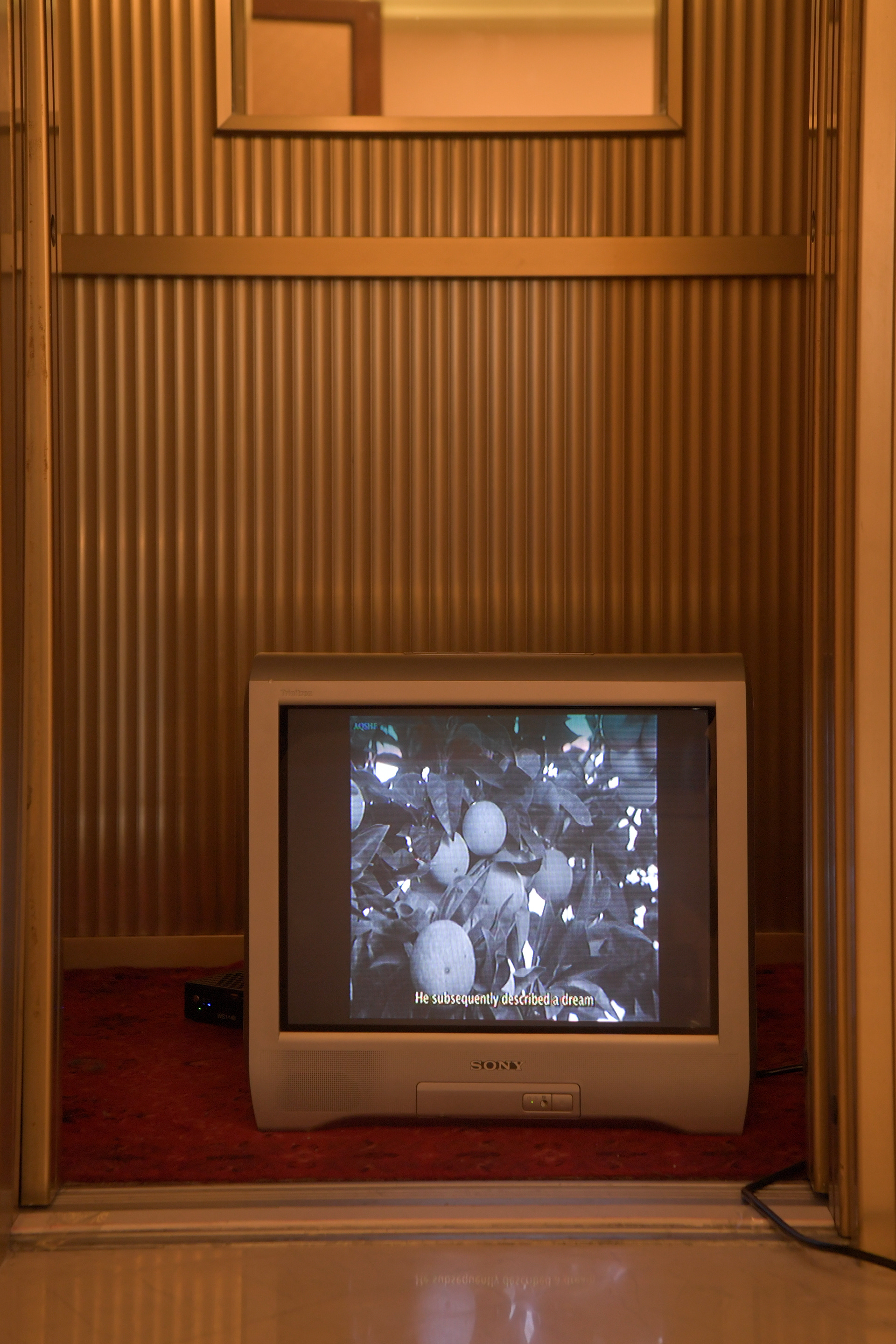
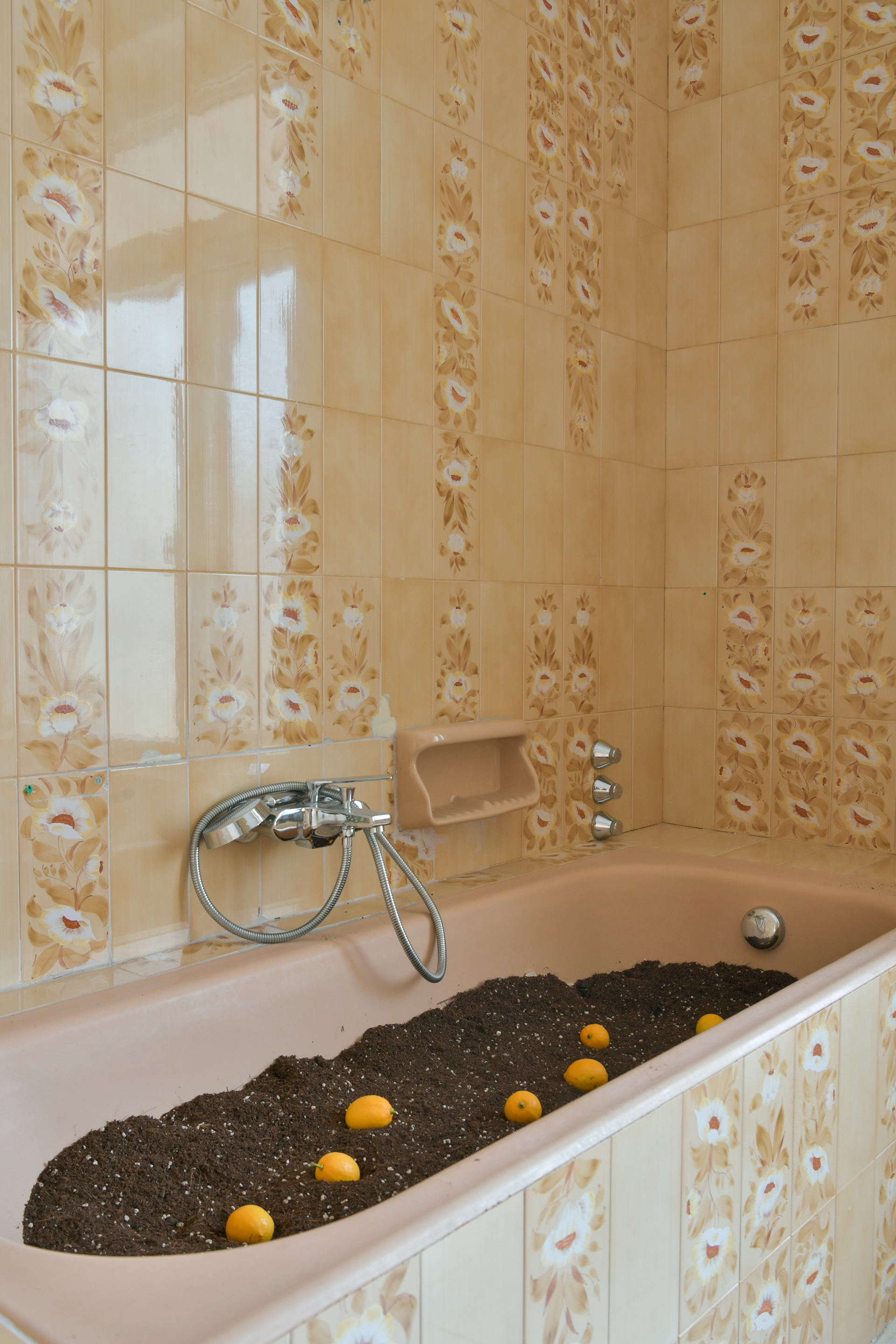
The 2.5 min short film shown on the television placed inside the dictator’s elevator is reconfigured from propaganda footage produced during Albania’s communist regime. It follows a group of scientists who have leased a lemon orchard to conduct a series of secret experiments.
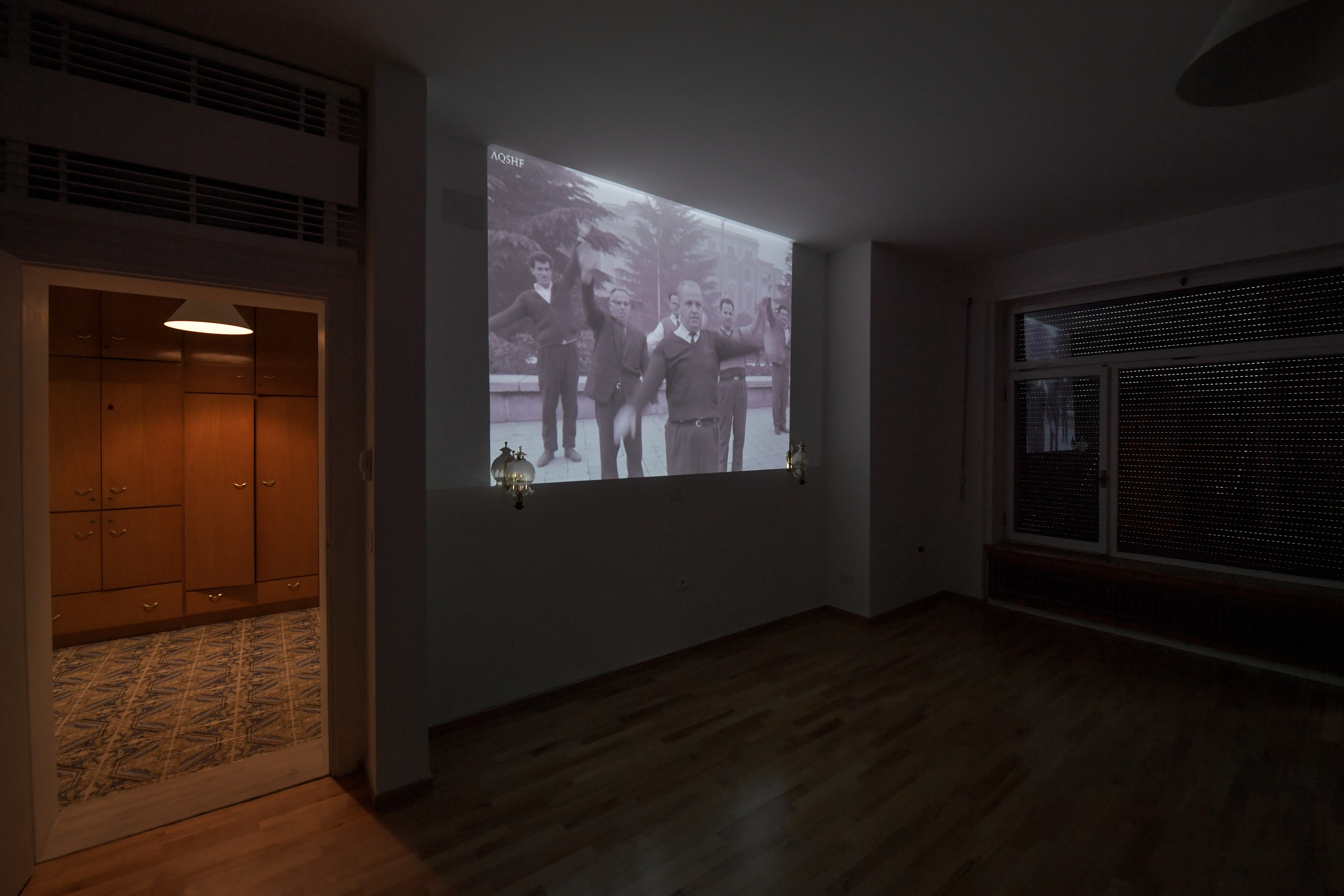
The 20 min short film projected in the artist’s studio is a film where the protagonist wakes up in Tirana in 1973 and faces a series of survival dilemmas and decisions. The film reconfigures archival propaganda footage from Albania’s communist regime alongside sequences from Mao’s China. The pictorial information is reiterated as a dilation of time, where an object such as a bottle of Maotai liquor becomes a thread connecting different times and spaces. With each return, the footage takes on a new function, at times presented as it is, at other times redirecting attention to a detail that might otherwise go unnoticed.
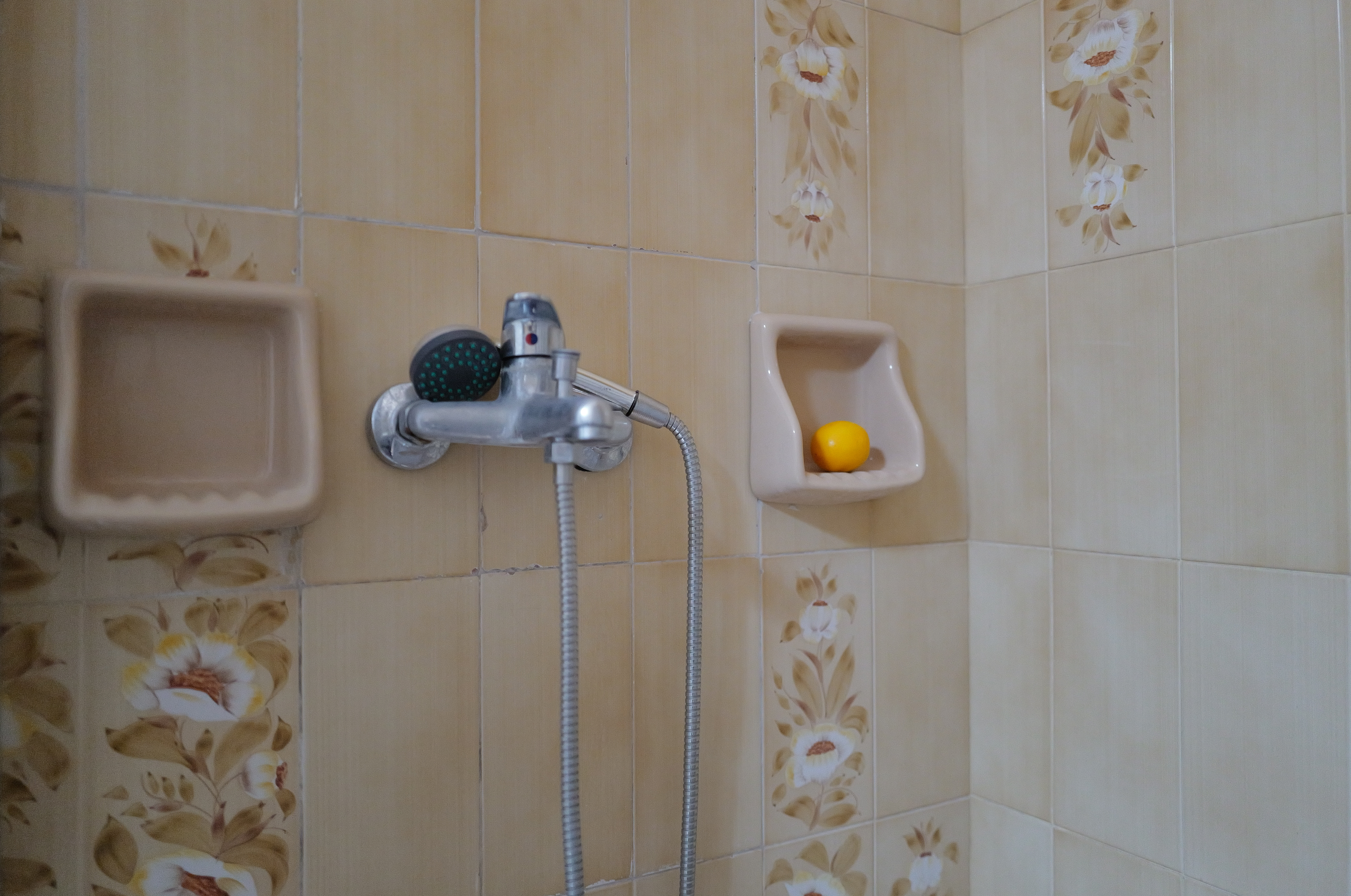
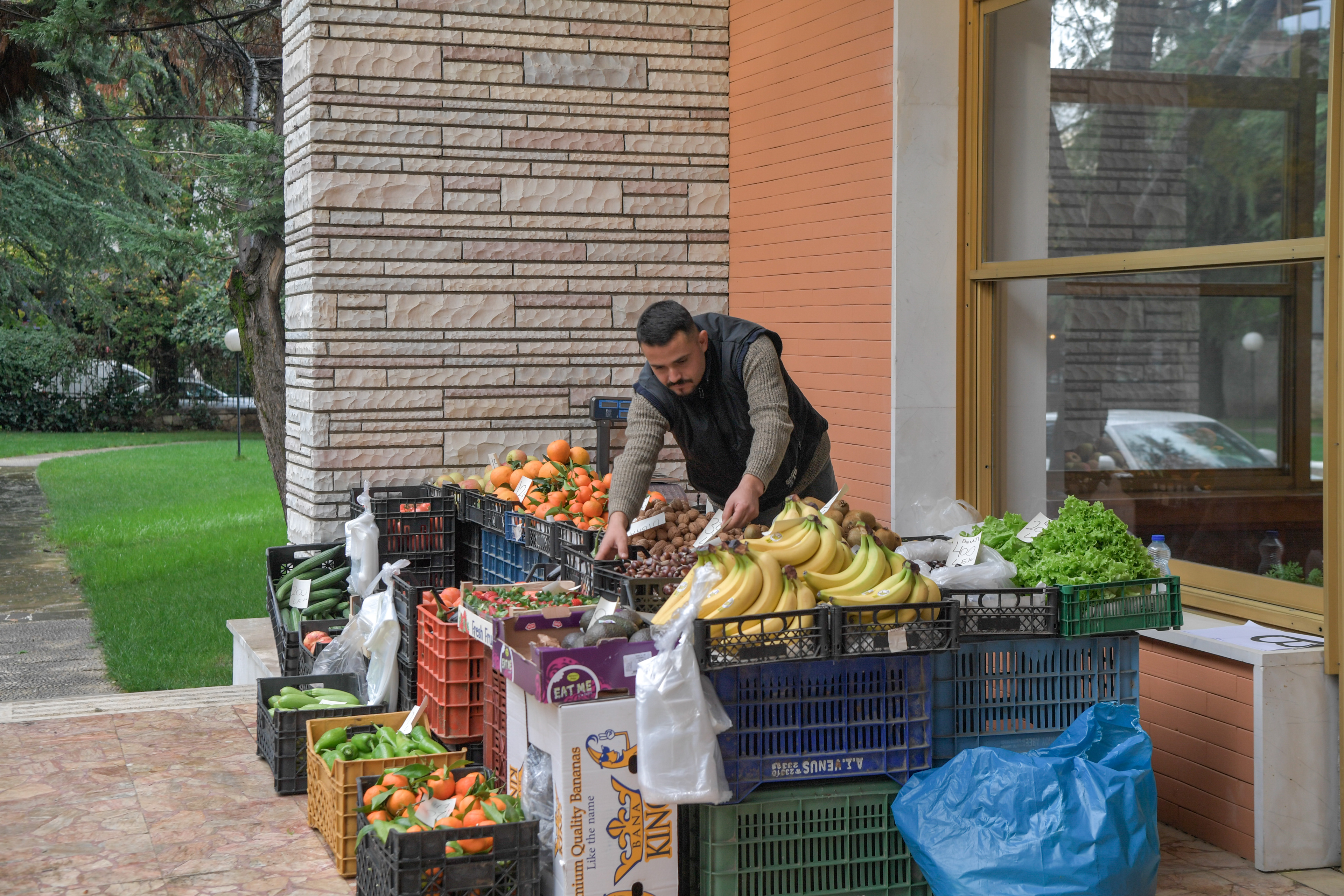
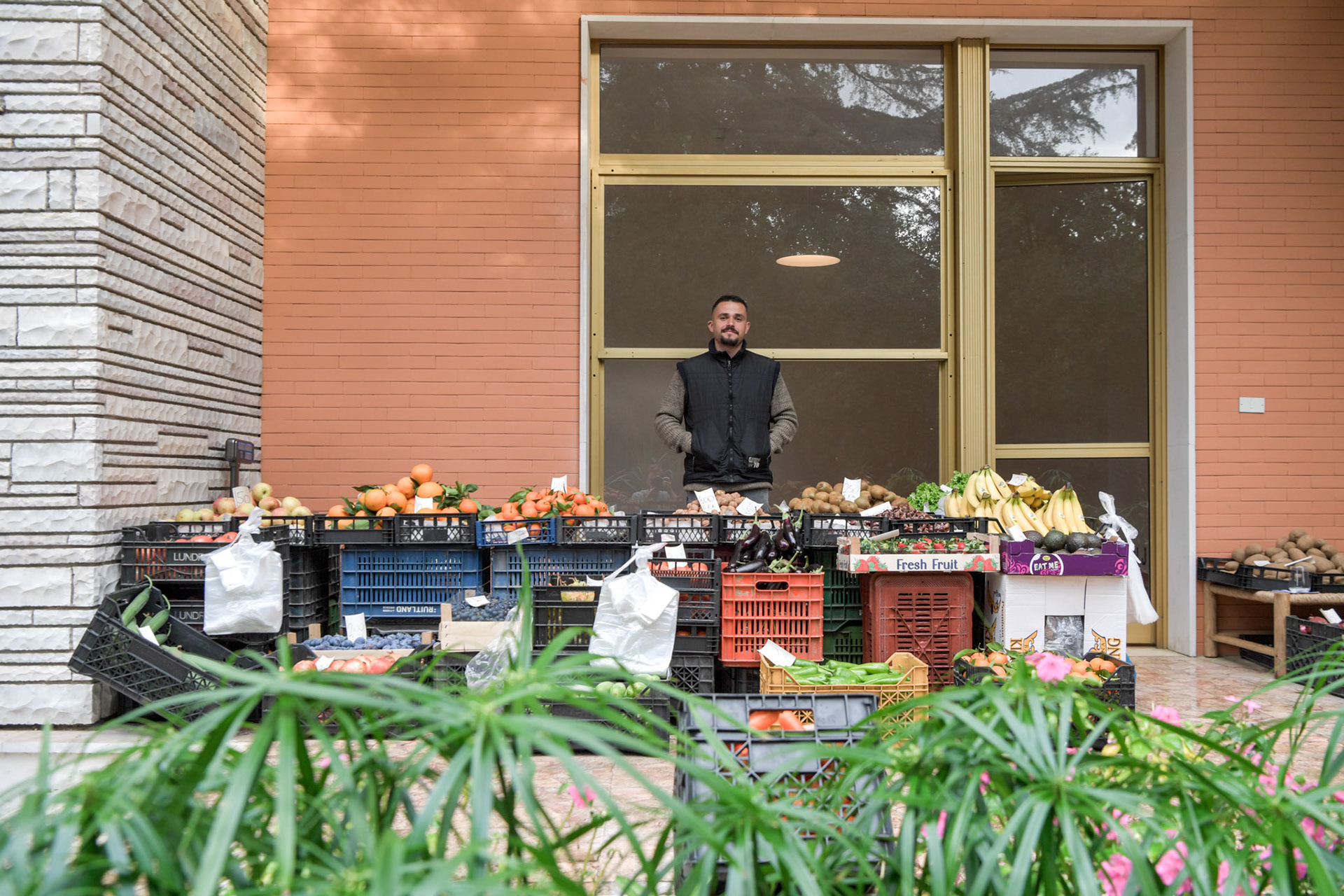
Outside this room, a Tirana's local merchant is invited to sell fruits and vegetables. What they offer, oranges, lemons, and other produce, whose meaning is defined by the surrounding installations. Visitors are encouraged to purchase according to their needs or their wish to take home a piece of art.
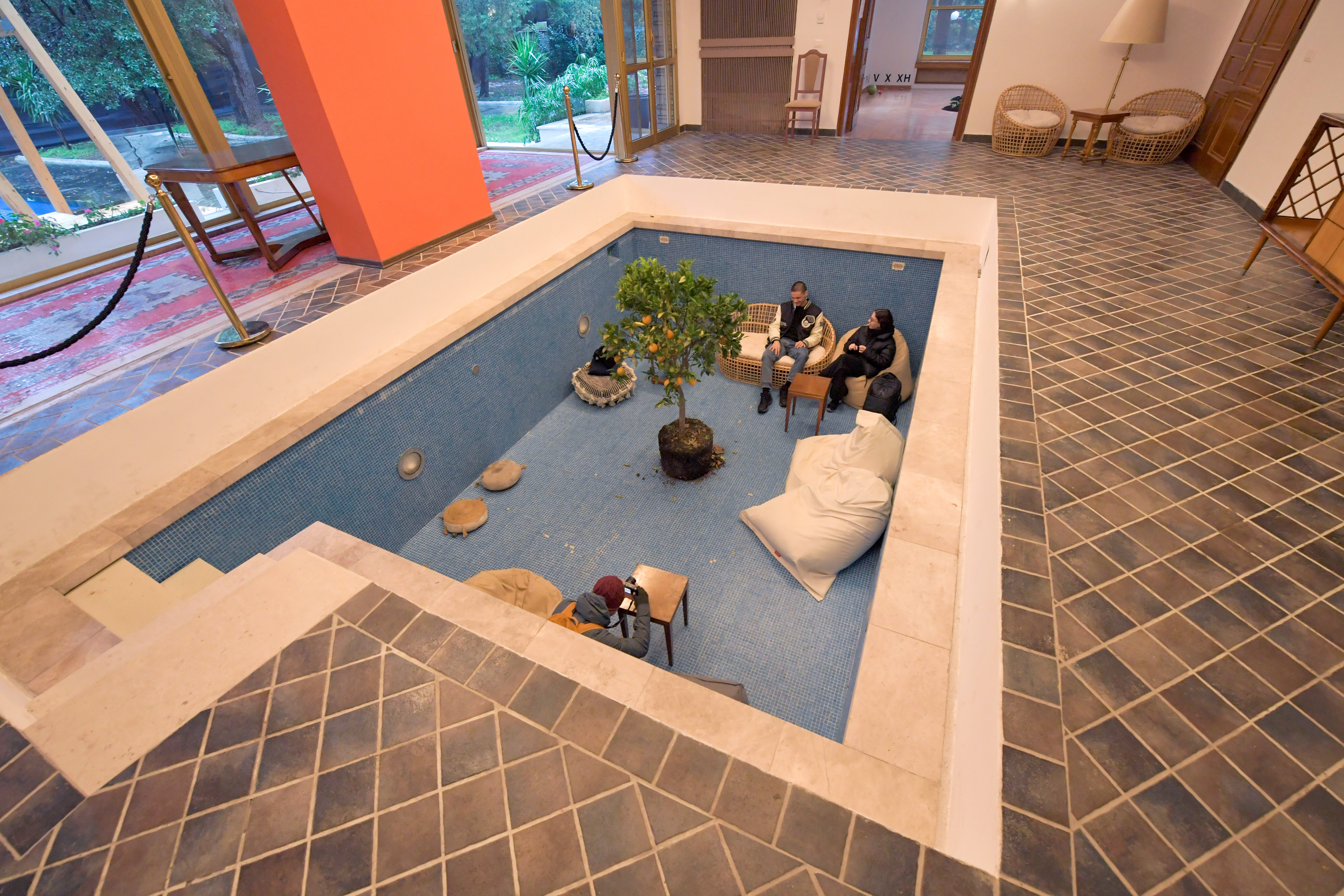
One orange tree is planted in the garden, and the other one is placed in the swimming pool, which turns it into a social space.
At night it turns into a DJ set-up.
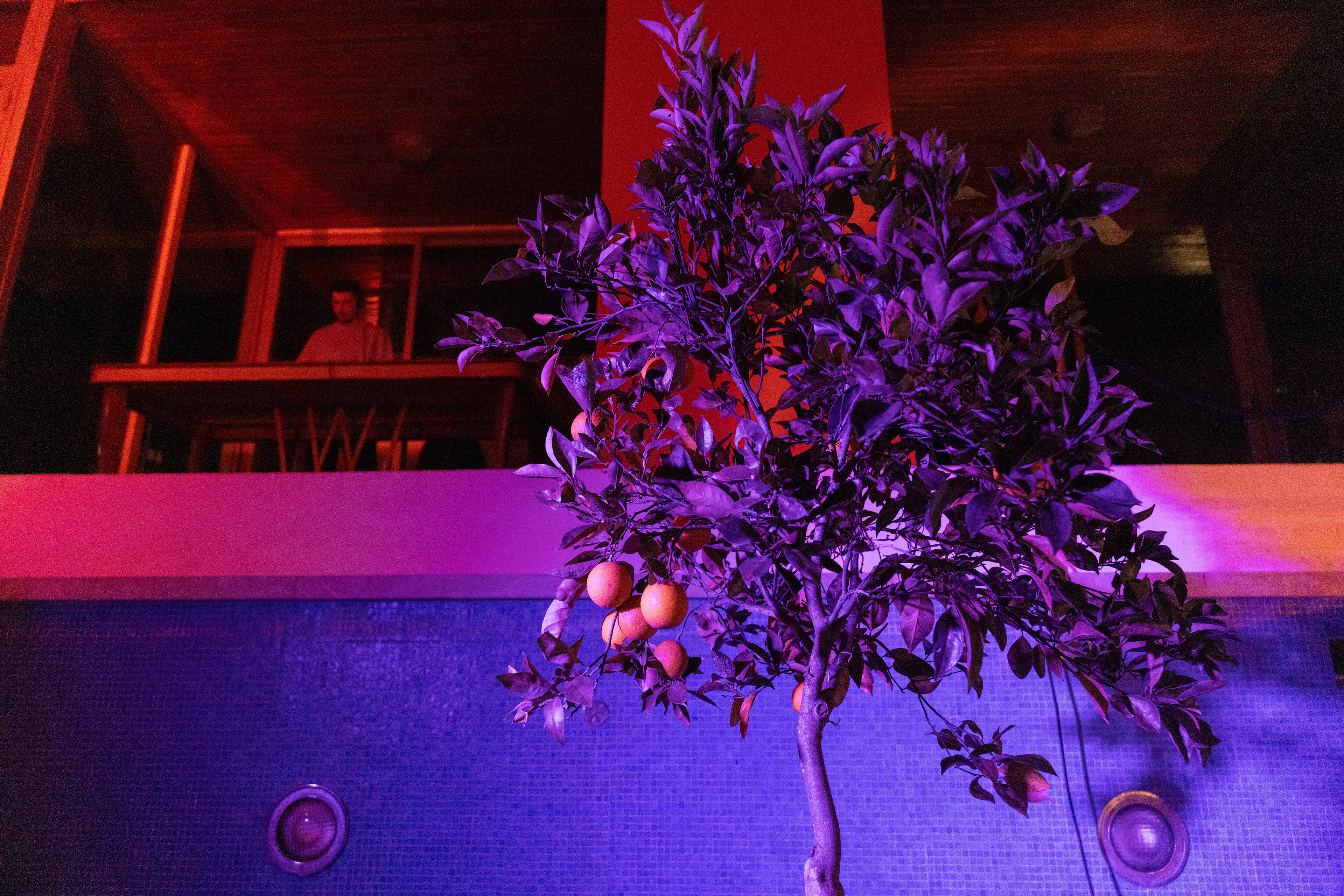
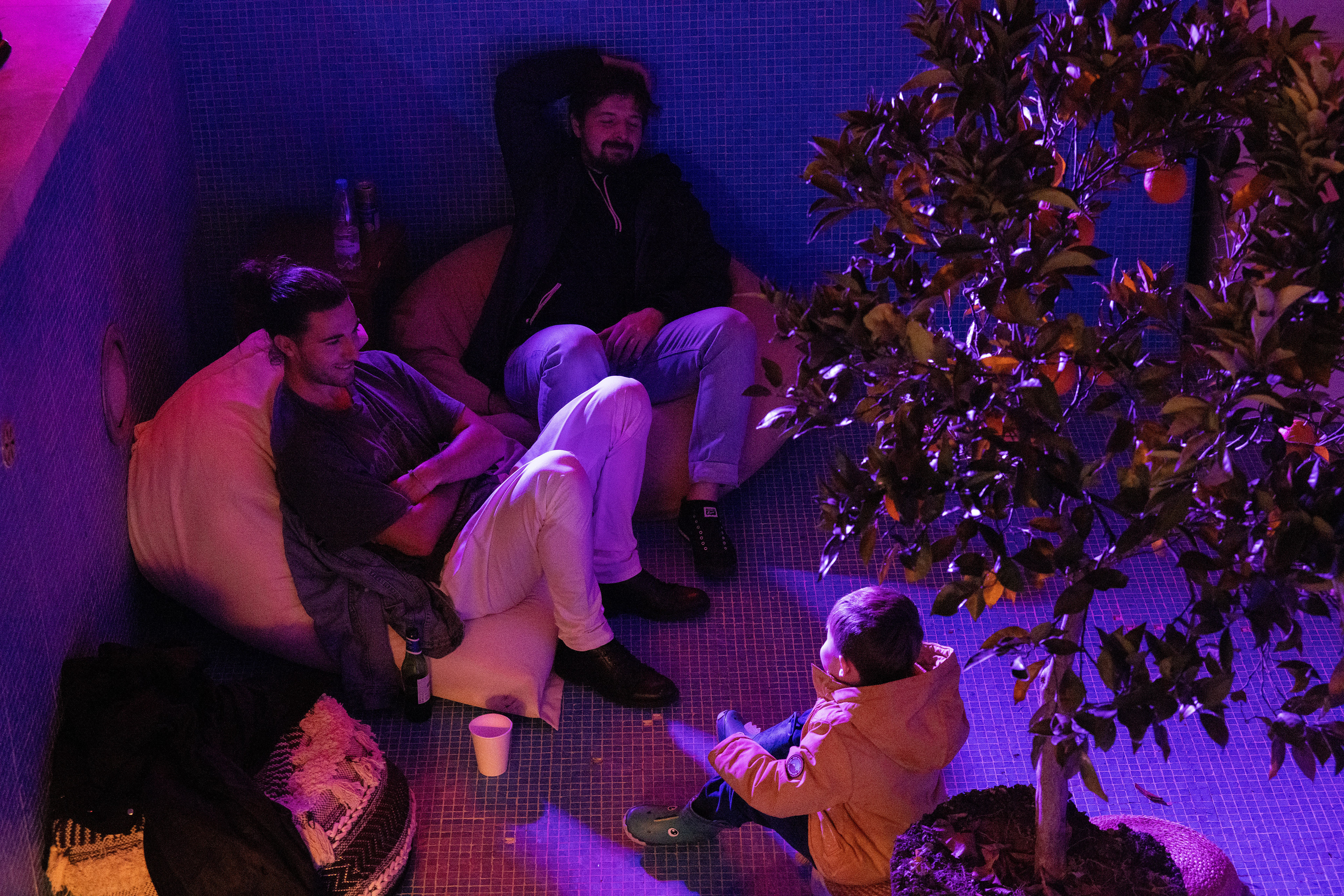
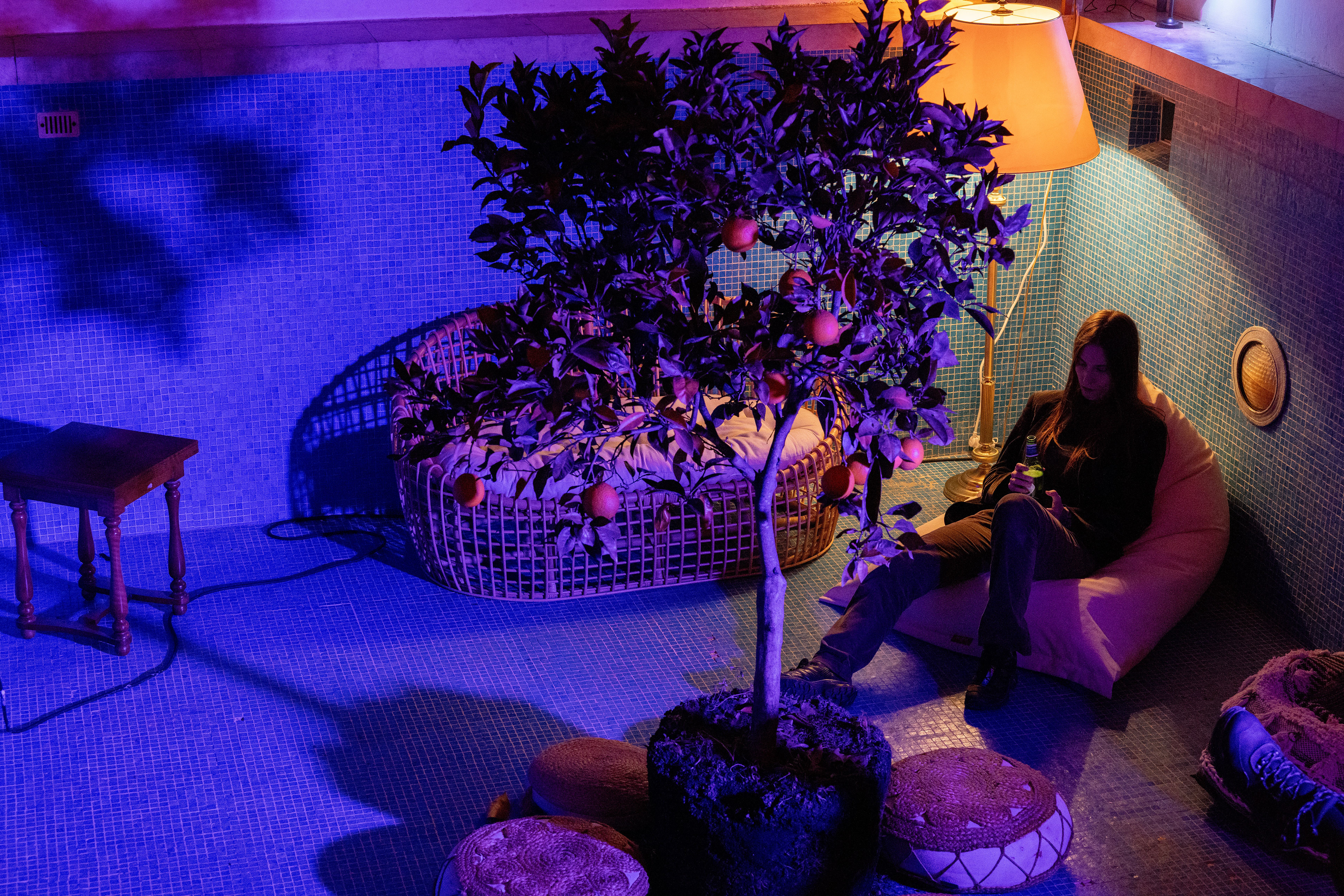
Photo: Atdhe Mulla & Blerta Kambo & Wandrille Potez